

How to Prepare, Scale, and Succeed During High-Volume Periods

Peak season doesn’t have to mean missed service-level agreements (SLAs), a chaotic warehouse, and burned-out staff. With the right strategies, ecommerce businesses can turn seasonal surges into growth opportunities.
This guide delivers a step-by-step breakdown of peak season warehouse optimization, from forecasting demand to managing inventory post-peak. Learn from the top-performing UK fashion brand Hype and walk away with practical actions you can implement today.
What is peak season warehouse optimization?
Peak season warehouse optimization is the process of configuring your warehouse to handle temporary spikes in order volume, without compromising speed, accuracy, or customer satisfaction. It includes:
- Inventory forecasting, planning, and control
- Warehouse layout and workflow changes
- Scalable staffing and training
- Strategic use of automation and technology
- Post-peak evaluation and cleanup
How do peak seasons strain ecommerce warehouses?
Most ecommerce warehouses are designed for average throughput. Peak season strain comes when order volume grows faster than the systems meant to handle it. This can result in delayed fulfillment, errors, stress, and customer frustration.
Common peak season challenges
- Space constraints: Incoming stock overflows shelving and blocks aisles.
- Disorganization: People, papers, and products get lost in the chaos.
- Slow pick times: Pathways get crowded; layouts aren’t built for speed.
- Costly overtime: Workers put in extra hours to keep up with orders.
- Training bottlenecks: New hires struggle to get productive quickly.
- Overselling: Systems don’t update inventory in real time.
- Returns overload: Post-peak returns pile up and eat into margin.
What to do: Update warehouse operations with scalable solutions proven to handle your most ambitious peak volumes and more. Read customer success stories from reputable ecommerce shipping and fulfillment software brands. Look for industries and verticals like yours. What kind of growth have they achieved, and which software solutions are they using to handle it?
The problem with paper
Many businesses heavily rely on manual or paper-based warehouse processes, disconnected systems, and “tribal knowledge.” These methods tend to create bottlenecks and errors in the fulfillment process when peak season hits. Plus, changing the warehouse layout or process can break a system that depends on human memory.
What to do: Upgrade your warehouse software to replace inefficient, error-prone warehouse practices:
- Inventory management system (IMS) – An IMS replaces spreadsheets for inventory planning and demand forecasting. It offers predictive purchasing to reorder inventory before you run out.
- Order management system (OMS) – An OMS integrates with all your sales channels. It organizes all orders in one place for easy processing without logging into multiple platforms.
- Warehouse management system (WMS) – A WMS replaces paper pick lists and warehouse “treasure hunts” with barcode scanning and mobile-guided picking routes.
- Multi-carrier shipping software – Shipping software integrates with your WMS to automate rate shopping, shipping service selection, and label generation while preventing mis-ships.
- Multichannel listing software – A catalog and listing management solution integrates with all your sales channels to update all product listings from one central hub. Automatically de-list products that sell out.
Why does warehouse optimization matter?

Warehouse optimization allows your team to increase throughput (the number of orders that flow through a warehouse each day) without hiring more workers. This expands your ability to scale operations and keep pace with high order volumes.
During peak sales periods, such as Black Friday, Cyber Monday, Christmas, or Back-to-School, small inefficiencies become large liabilities. A delayed pick time or inaccurate order that’s acceptable in April becomes a lost customer in November.
The challenge: Peak season tends to sneak up on us. Of course, warehouse optimization is top-of-mind during the height of peak when performance issues surface. However, it’s often too late for major changes at that point.
What to do: Start peak planning early. Collect feedback from warehouse staff right after peak while the experience is fresh. Then, turn it into a game plan for next year. Here’s a peak season warehouse prep checklist to help you get started.
Real-world example: Hype’s tips for handling peak

- Work in Pairs: One team member scans items using the Descartes Peoplevox WMS and prints shipping labels while a second worker packs the items. This allows each to work faster and with more focus.
- Dynamic Storage: Store popular SKUs closer to pack stations, regardless of category, to minimize travel time and increase pick efficiency. This is possible using dynamic storage.
- Live Dashboards: Screens show orders left to fulfill, Amazon Seller Fulfilled Prime (SFP) cutoffs, and team productivity, turning data into motivation. See an example of dashboards for warehouse productivity.
- Aisle Gaps: Strategic breaks in shelving rows reduce unnecessary walking during pick runs. Here are more ideas for how to design your optimal warehouse layout.
- Dispatched Order Zones: Labeled, ready-to-ship parcels are staged on trolleys near the loading area for faster courier handoff.
Tip: Peak success doesn’t come from brute force. It comes from strategic system optimization, visibility into warehouse performance, and faster workflows.
Want a closer look at Hype’s approach to peak planning? See 5 Tips for Ecommerce Peak Season Prep
Ways to forecast demand and inventory accurately
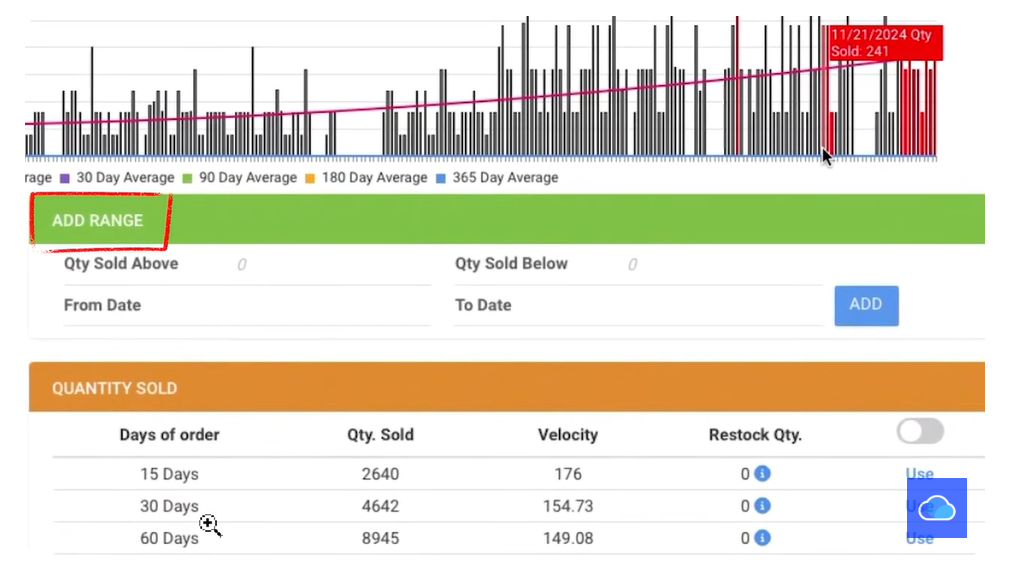
Sales forecasting helps you stock appropriately, avoid overbuying, and minimize the risk of stockouts when sales surge.
How to start forecasting
- Use historical data from your IMS, ecommerce, and Enterprise Resource Planning (ERP) platforms – It’s best to use an all-in-one ecommerce platform that offers customizable inventory and sales reports and forecasting tools.
- Identify trends by channel and SKU – Use pre-built or custom reports to discover the bestselling sales channels and the top SKUs for each channel year over year (YoY). Adjust your inventory to follow these trends.
- Consider current trends and promotions – Which SKUs are your current winners? Which products will you promote with peak season marketing campaigns and sales events? What’s trending with your target market this season?
- Plan around socio-economic and geopolitical factors – What kind of buying power does your target market have this season? How does it compare to previous years? Will trade wars or other geopolitical factors affect consumer behavior?
- Adjust forecasts weekly during peak to respond to real-time changes – Monitor sales trends during peak. Utilize strategic sales tactics to move inventory faster or slow down sales on SKUs that are running low.
A tool that helps:
Descartes Sellercloud all-in-one ecommerce operations platform
- Syncs listings and available inventory across all channels for quick updates.
- Forecasts how much to order based on current aggregate inventory, product velocity, purchase order (PO) ETA, and the previously selected sales period.
- Automates purchase orders to replenish inventory according to forecasts and stock levels.
- Supports dynamic storage to accommodate extra inventory according to forecasts.
Have you been looking for a tool like this? Request a demo
Tip: Plan for supplier lead times. If you plan to scale peak inventory according to forecasts, make sure your vendors can keep up.
Learn more about how to improve ecommerce forecasting
How to redesign your warehouse layout for speed
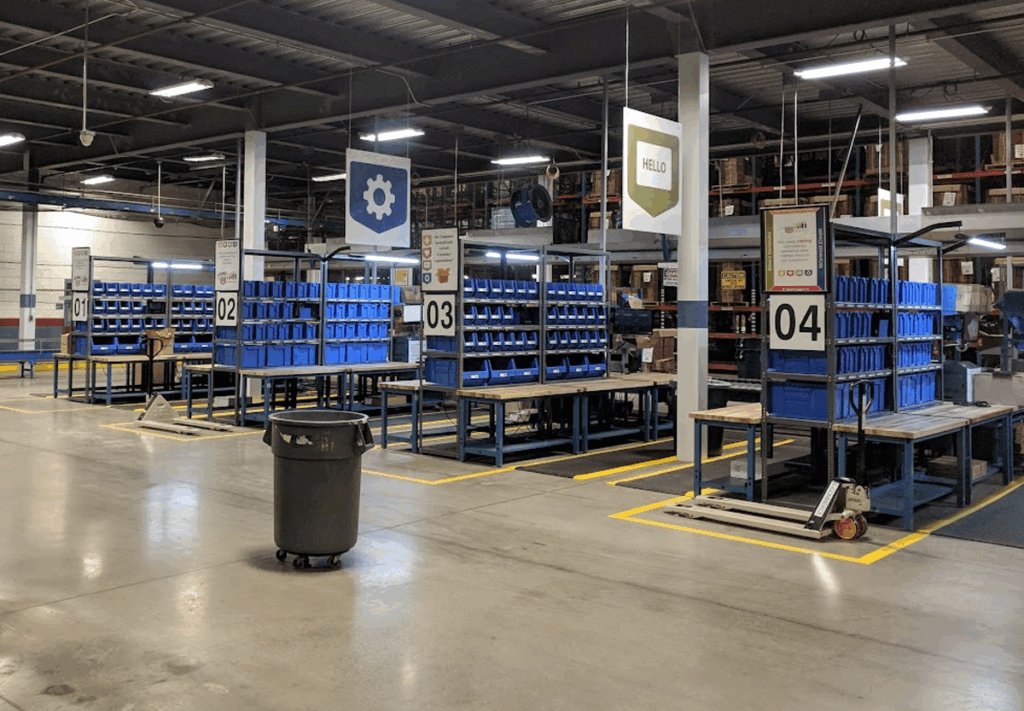
To redesign your warehouse layout for speed, focus on dynamic storage, zoning, popular SKU proximity, low space, aisle design, and mobile label printing. These strategies reduce walking time, increase pick speed, and eliminate visual scanning.
Layout optimization strategies
- Dynamic storage: Use a barcode-based system to store products in flexible locations; scan bin locations during putaway for easy retrieval with a mobile WMS.
- Zoning: Separate receiving, storage, picking, packing, shipping, and returns processing into dedicated areas to avoid congestion.
- Popular SKU Proximity: Move high-demand items closer to packing stations; group items that are typically purchased together, e.g., sunglasses and glasses case.
- Use Low Space: Keep seasonal items at ground level; reserve eye-level zones for fast movers; use high shelving for out-of-season or slow-moving items.
- Aisle Design: Add pick face gaps to reduce walking time, reroute pickers for efficiency, and avoid congested aisles.
- Mobile Shipping Station: For single-item picking, set a thermal printer on the trolley with bins; as you scan each order, print the shipping label; put together.
Tip: Use batch picking. Use your WMS to group orders with overlapping SKUs into batches to reduce trips and streamline pick runs.
Tips to train your staff for consistency and speed
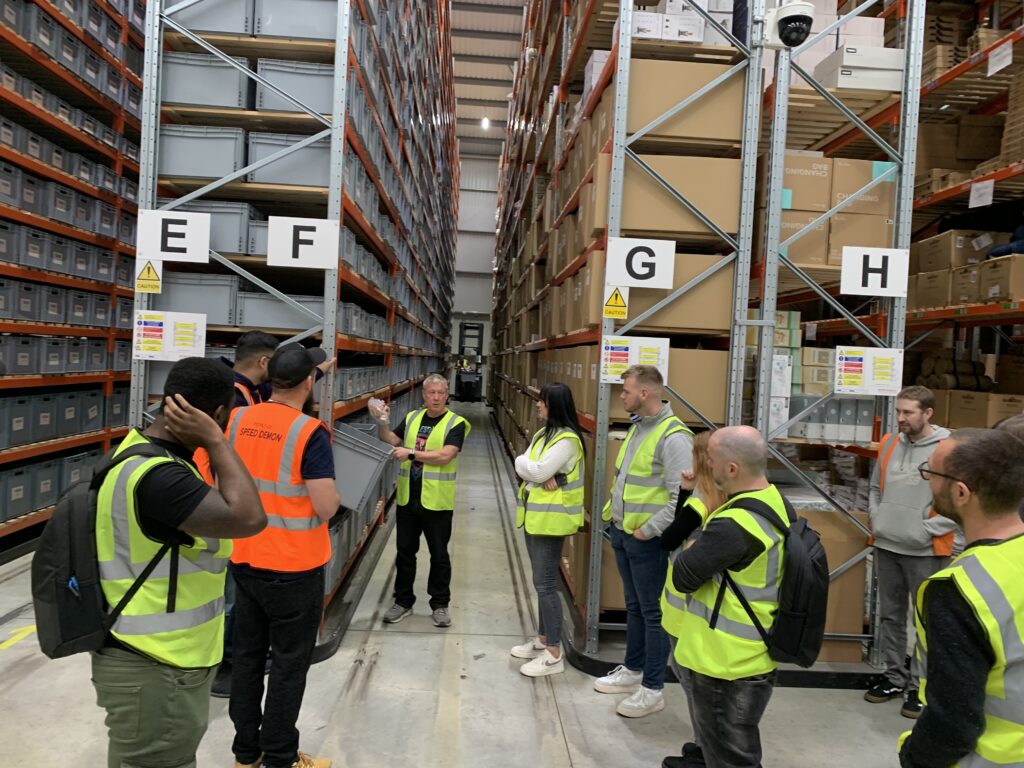
Peak hiring often means onboarding temporary workers. If your training process is manual or relies on memorization, it leaves too much room for error and slows down the entire team.
Training tips
- Use consistent, simple, repeatable workflows. Design standard operating procedures (SOPs) and instructions to require as little mental effort as possible.
- Don’t rely on memory; provide visual aids and cheat sheets. Clearly label zones, post SOPs in prominent places, and provide aids in multiple languages.
- Assign team leads or “buddies” for fast feedback. Clarify expectations, establish roles, and build in accountability for new workers.
- Use role-based separation: scanning vs. packing vs. dispatch. Don’t expect each worker to do it all; narrow skills and workflows for greater efficiency.
- Provide technology to guide workers and prevent human errors. Use a mobile WMS for picking; set shipping automation for service selection and label printing.
How Descartes Peoplevox helps:
- “We’ve experienced 75% faster picking using 67% less labor.” – Grant Kiefaber, State & Liberty
- Seasonal workers can be trained to use the Descartes Peoplevox mobile WMS and be productive in under an hour.
- The interface is intuitive, and processes are clear and guided, reducing ramp time and errors.
- The WMS integrates with Descartes ShipRush to automate shipping label printing.
Scale with automation and integrated systems
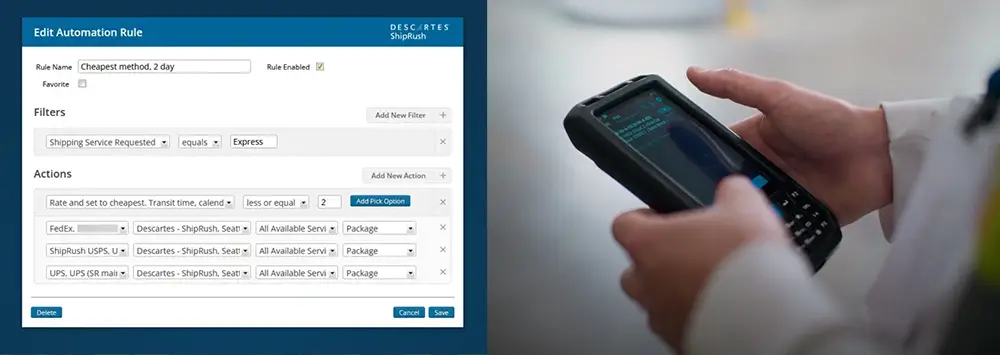
Integrated technology can help your warehouse team handle peak season order volumes without burning out or hiring extra personnel. Replace paper-based or labor-intensive processes with modern, automated methods to increase efficiency.
Key technologies:
- Warehouse management system (WMS): Handles real-time order processing, location mapping, guided pick routes, and workflow automation.
- Mobile barcode scanning: Speeds up picking, reduces walk time, and virtually eliminates human error and mis-picks.
- Inventory management system (IMS): Automatically sync inventory across sales channels and warehouses; use predictive purchasing to restock inventory.
- Order management system (OMS): Automatically prioritize which orders to pick first, update order status, and communicate with customers.
- Shipping software: Automatically rate shop, select shipping services, and print labels using multi-carrier shipping software like Descartes ShipRush.
- Purchasing software: Automate purchase orders and vendor communication to keep inventory adequately stocked.
- Dashboards: Monitor productivity, order fulfillment status, and SLA compliance in real time.
What you gain:
- Lower operational costs – Avoid hiring more staff, use space and supplies more efficiently, lower shipping costs, and prevent expensive mistakes.
- Faster warehouse throughput – Fulfill more orders per day with the same number of people.
- Higher accuracy – Virtually eliminate key entry errors, mis-picks, and mis-ships; reduce the number of returns.
- Better customer experience – Keep your delivery promise and ship the right items to the correct address, on time.
- Improved morale – Prevent warehouse problems, reduce overtime and workplace stress, and empower employees to meet performance goals.
Descartes offers integrated software solutions to automate ecommerce operations. Ready to look at some options?
How to manage inventory for peak season
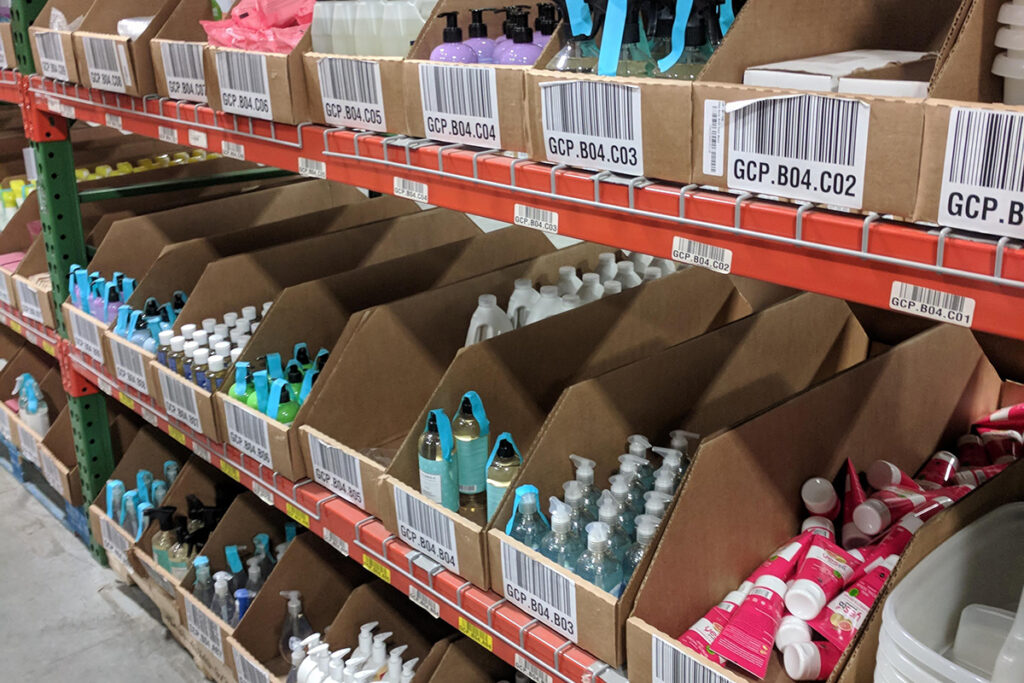
Around peak seasons, ecommerce businesses can control inventory by pre-peak planning and stocking, consistent monitoring, restocking, and staging during peak, and clearing excess stock post-peak. Here’s a stage-by-stage breakdown:
Pre-peak:
- Stock fast movers early. Proactively order your best-selling SKUs and build your warehouse supply; stage fast movers close to pack/ship stations just before peak.
- Set reorder points and safety stock levels. Use your sales forecasts or IMS predictive purchasing feature to avoid stockouts and replenish in time.
- Communicate with suppliers about lead times. Understand how long it will take suppliers to complete POs and restock your SKUs; factor that time into reordering.
During peak:
- Monitor real-time inventory across channels. Use your IMS reports to track trends; look for anomalies that fall outside of your forecasts; make adjustments.
- Use buffer zones for restocking. Proper putaway isn’t always possible during peak; receive shipments into a buffer zone where SKUs can be picked if needed.
- Stage orders efficiently for pickup. Set a carrier pickup zone with rolling carts to keep shipments out of the way; keep outbound orders separate from receiving.
- Receive and relist returns. Designate a returns management zone to receive, inspect, and relist undamaged returns; set damaged items aside for later.
Post-peak:
- Clear excess inventory. Bundle seasonal SKUs with steady sellers; use flash sales, auctions, or influencer marketing to move leftover inventory.
- Process all damaged returns. Receive and inspect all damaged returns; repair and repackage what you can; record losses and file claims reports.
Which warehouse KPIs matter?

If the goal is to deliver the correct item on time and as efficiently as possible, these KPIs give leaders visibility into effectiveness. They also help leaders identify where bottlenecks and errors occur, which can result in financial losses for the company.
Key peak season KPIs:
- Order accuracy rate – Shows the percentage of total orders that you perfectly fulfilled; calculated as Order Accuracy Rate = (Total Orders Shipped/Number of Perfect Orders) × 100
- Avg. pick time per order – Measures average picking speed performance; calculated as Average Pick Time per Order = Total Orders Picked/Total Picking Time
- On-time ship rate – Indicates how often your business met shipping deadlines; calculated as On-Time Ship Rate = (Total Orders Shipped/Orders Shipped on or Before Their Ship-By Date) ×100
- Labor cost per order – Quantifies manual fulfillment costs; calculated as Labor Cost per Order = Total Orders Shipped/Total Labor Cost
- Avg. return processing time – Shows how long it typically took a worker to receive, process, and relist a returned item for sale; calculated as Average Return Processing Time = Number of Returns Processed/Total Time to Process All Returns
Use these KPIs to benchmark performance, identify bottlenecks in the fulfillment process, and improve your peak season warehouse strategy for next year.
See more warehouse KPIs
Learn from every peak
Don’t just survive peak season—study it and analyze your warehouse performance. Collect insights while the experience is still fresh.
What to review:
- SLA compliance and missed cutoffs: How well did vendors follow the agreements? Who missed cutoffs, why, and what will you do about it?
- Staffing adequacy and training effectiveness: Did you hire enough workers to keep up with order volume? Did the training equip them for peak performance?
- SKU performance by channel: Which SKUs were your top sellers this year? Which channels yielded the most sales? What were your highest-selling SKUs on each channel?
- Layout and flow constraints: Did your warehouse layout reduce walking time and improve average pick speed YoY? What would you change for next year?
Conduct post-peak debriefs with your team and vendors, then document feedback and address known issues. Update SOPs. Tweak your tech stack and warehouse layout for next year.
Peak doesn't have to be painful
Descartes offers ecommerce operations solutions that are purpose-built for high-volume ecommerce brands. Together, they help you:
- Keep up with peak orders without hiring more workers
- Pick and pack up to 75% faster to scale operations
- Eliminate mis-picks and mis-ships for 99.9% order fulfillment accuracy
- Prevent overselling and underselling by syncing inventory in real time
- Improve forecasting and inventory control with predictive purchasing
Ready to get started?